Why There Is No Best Trimmer Line Shape——Only the Wrong Shape for the Job
Why There Is No Best Trimmer Line Shape — Only the Wrong Shape for the Job
Round, square, twisted, or serrated — each shape is engineered to win in a specific cutting condition. After 19 years across 20+ markets, here's how to match shape to segment and stop losing accounts to competitors who carry the right SKU.
19 Years Industry Experience | 20+ Countries Served
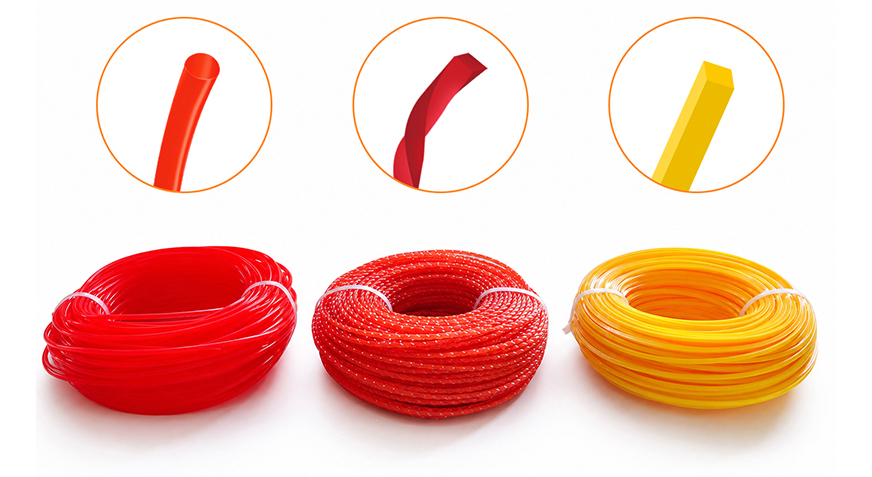
It's a reasonable question. It's also the wrong one.
After 19 years sourcing trimmer line for global distributors and dealers, we've stocked every mainstream shape — round, square, twisted, star, serrated, pentagon. We've shipped them into residential markets, commercial landscaping, and heavy brush-clearing operations across the US, EU, Australia, and emerging markets.
The thing we've learned: shape is a tool, not a feature. Each shape is engineered to win in a specific cutting condition. Push it outside that condition, and it underperforms — and your end user blames the trimmer head, not your line.
Let's walk through the four shapes most B2B buyers actually stock, what each one is genuinely good at, where it loses, and how to match shape to your customer segment.
Round Line — The Universal Default
Round is the shape 70% of residential buyers ask for first. There's a reason.
Round line has the longest lifespan per meter of any shape — no sharp edges to chip, no aerodynamic drag, smooth feeding through auto-load heads. It cuts by speed (line tip velocity), so it works best at high RPM and on thinner vegetation.
Shape 01
✓ Where It Wins
Lawns, edging, weekly residential trimming. Longest life of any shape. Quietest in operation. Cheapest to manufacture. Smoothest auto-feed performance.
✗ Where It Loses
Thick weeds, brush, woody stems up to 1cm diameter. Round line glances off rather than bites — it lacks the cutting edges needed for aggressive vegetation.
Square / Multi-sided Line — The Cutter
Square line (and its cousins — triangular, pentagon, star) has sharp edges that bite into thick vegetation. Every revolution cuts. It's aggressive where round is gentle.
Shape 02
✓ Where It Wins
Heavy weeds, brush, brambles up to 2cm. Commercial landscaping where speed of cut matters more than line life. First-pass clearing of overgrown lots.
✗ Where It Loses
Cuts itself down faster than round — typically 30–40% shorter life on the same diameter. Noisier. Harder on trimmer head eyelets. The hidden trap: sharp edges round off after day one, leaving a square cross-section with the cutting profile of round — but 30% less material per meter.
Twisted / Spiral Line — The Quiet One
Twisted line has a helical geometry that reduces air drag and noise — typically 50% quieter than round of the same diameter. The aerodynamic profile also means less vibration at high RPM.
Shape 03
✓ Where It Wins
Noise-restricted neighborhoods (HOA communities, residential areas with ordinances). Premium positioning — homeowners will pay 20–30% more for "the quiet line." Commercial operators working in hospitals, schools, hotels, and residential zones.
✗ Where It Loses
More expensive to manufacture (slower extrusion, more scrap). Less aggressive on thick weeds than square. The twist can unwind at very high RPM on cheap tooling.
Star / Serrated Line — The Specialist
Star-shaped and serrated lines are designed for one job: cutting woody stems and brambles that would stall a round line. Each edge acts like a small saw tooth.
Shape 04
✓ Where It Wins
Brambles, brush, saplings up to 3cm. Land clearing, property maintenance in rural areas, fire-prevention clearing. The only shape that effectively cuts woody growth without stalling the trimmer.
✗ Where It Loses
Aggressive wear — eats through line fast. Overkill for any lawn or edging job. Cannot be fed through standard auto-load heads on some trimmer models.
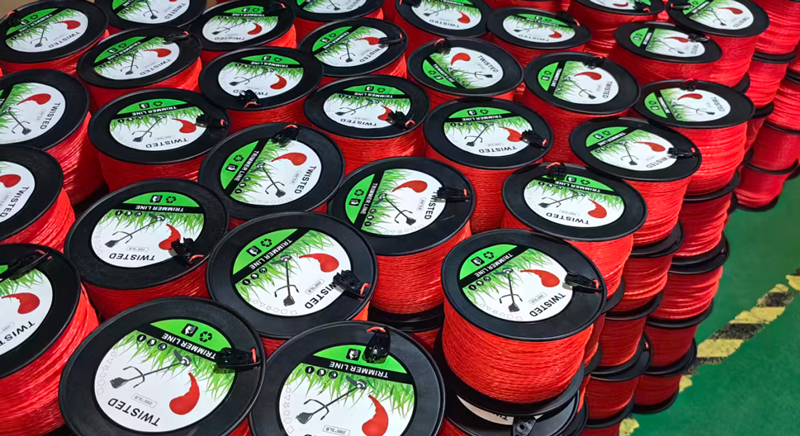
Twisted trimmer line in our warehouse — the go-to choice for professional landscapers running high-RPM gas trimmers.
Four Shapes at a Glance
| Attribute | Round | Square | Twisted | Serrated |
|---|---|---|---|---|
| Cutting Mechanism | Tip velocity | Edge bite | Aerodynamic + edge | Saw-tooth action |
| Max Vegetation | Thin grass, weeds | Thick weeds, 2cm | Grass + light brush | Woody stems, 3cm |
| Noise Level | Low | Moderate | Lowest (–50%) | High |
| Lifespan per Meter | Longest | –30 to –40% | Comparable to round | Shortest |
| Auto-feed Compatible | Yes — smoothest | Yes — harder on eyelets | Yes | Limited — check model |
| Cost Index | Baseline | +10–15% | +20–30% | +25–35% |
| Best Market Segment | Residential / commercial daily | Commercial landscaping | Premium / noise-restricted | Rural / land clearing |
The Mistake B2B Buyers Make Every Week
Here's what we see constantly: a distributor imports one shape (usually round, because that's what their first supplier quoted) and tries to sell it as "the best" for every market segment.
It doesn't work that way.
A distributor carries only round line and loses the commercial landscaping account because the crew needs square for thick weed clearance speed.
A wholesaler pushes square into an EU residential market where noise ordinances demand twisted — and loses the account to a competitor who carries the right SKU.
A buyer stocks serrated for everything because "it cuts the most" — then can't compete on price in residential retail and watches the product collect dust.
One shape does not serve all five market segments. If your SKU list is one shape, you're leaving margin on the table — and your competitors who carry four are walking into your accounts.
The Shape-to-Segment Matrix
Here's how we match shape to market based on 19 years of shipping into these regions:
This isn't theory. This is what 19 years of shipping into these markets taught us. The segments are genuinely different — and they require different shapes.
What We Check Before Recommending a Shape
Before we recommend a shape to any buyer, we ask three questions:
The vegetation type determines the cutting mechanism required. Grass needs speed; brush needs edges; brambles need saw teeth; noise-sensitive zones need aerodynamic profiles.
Lawns = Round · Thick weeds = Square · Brambles = Serrated · Noise-sensitive = TwistedIf the buyer is selling into commercial daily-use, life per meter matters more than cut aggressiveness. If residential weekly-use, cut quality matters more than total lifespan.
Commercial daily-use = Round · Residential weekly = Any shape acceptable
Twisted costs more. Square wears faster (so the customer pays more per cut). Round is the cheapest per meter but least aggressive. Match the shape to the price the market will bear.
Budget = Round · Mid-range = Square · Premium = Twisted · Specialty = Serrated
The Bottom Line
The wrong question is "what's your best-selling shape?" The right question is: "What does my customer's end user actually cut, and how often?" Match the shape to the job. Stock four SKUs if your segment needs four. Don't try to be everything to everyone with one shape — your competitor who carries the right shape for each segment will eat your lunch.
In our catalog, round, square, twisted, and serrated each have a place. Not because we want to complicate inventory — because the segments are genuinely different, and matching shape to segment is the difference between a distributor who grows and one who churns accounts.
In the next article in this series, we'll cover diameter and power matching — how to pair the right line gauge with the right trimmer motor to maximize both cut performance and line life. Because once you've nailed material and shape, diameter is the final spec that ties it all together.
Want the Full Shape-to-Segment Matrix?
Contact our team for the complete PDF matrix and product portfolio across all four shapes.
Request Full Catalog & Shape Matrix© 2026 OPE Parts Technical Sourcing. All rights reserved. | This article is part of the Trimmer Line Field Guide series for B2B distributors and sourcing professionals.