Private Label Isn't About Your Logo — It's About Locking the Spec
Private Label Isn't About Your Logo — It's About Locking the Spec
The logo is the easy part. After 19 years in OPE parts and watching private-label programs fail in year two, here's the 6-point manufacturing spec that protects your brand — and the three private-label paths matched to your volume.
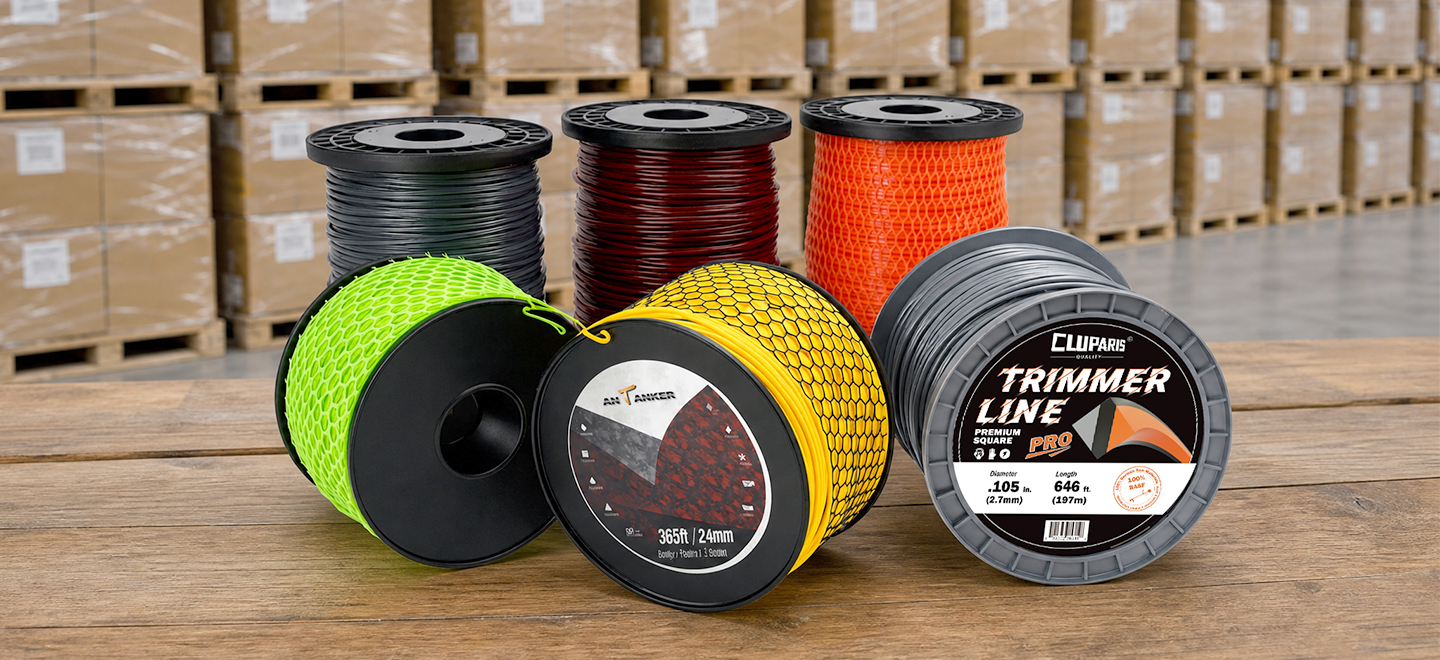
Wrong first question. Not because the cost doesn't matter — but because the logo is the easy part.
Here's the pattern we've watched repeat across 19 years: a distributor launches a private label. Year one looks great. First production run is exactly what they approved. Then the second or third run drifts — slightly cheaper material, slightly wider tolerance, slightly different spool. The end users don't know why the line they trusted suddenly breaks more. They just know it's not as good as it used to be. And the brand takes the damage, not the factory.
The failure didn't happen in year two. It happened on day one — when nobody locked the spec in writing.
This is the final article in our 5-part series on trimmer line. We've covered material grade, shape, diameter & power matching, and field testing. This is where it all converges: turning that selection framework into your own branded product line — without losing control of it.
Private label isn't about your logo. It's about locking the spec. The brands that survive year two are the ones whose spec is enforceable, not aspirational.
The Three Private-Label Paths
Not every buyer needs full OEM. We usually see three paths, each matched to a different volume and commitment level:
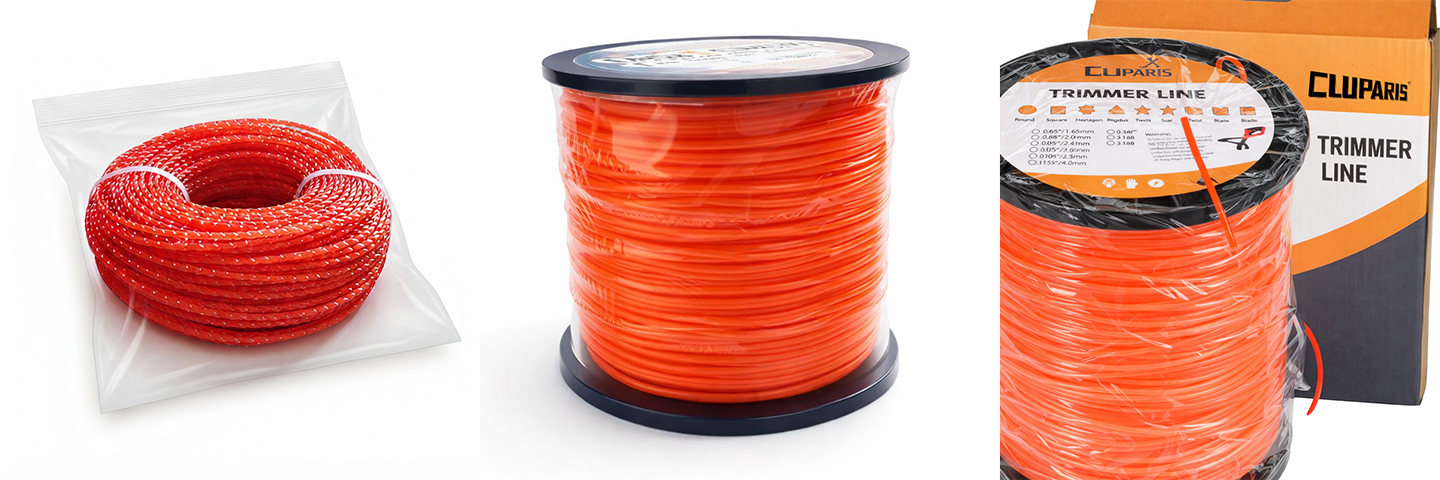
You buy existing stock in standard packaging, apply your label over the neutral packaging.
Fastest. Zero tooling cost.
Lowest of the three options.
Low — same line your competitor can buy next week.
Low financial commitment.
Best For Dealers testing demand before committing to a branded program.
The line stays on existing tooling (standard shapes, standard diameters), but the packaging is fully yours — printed spool, printed bag, your color coding, your SKU structure.
Proven existing tooling.
Fully yours on packaging.
Reasonable — stays manageable.
Medium — looks custom, runs on proven tooling.
Custom shape, custom diameter, custom winding weights, custom packaging — your product, nobody else's.
Full — shape, diameter, packaging.
Highest, longest lead time.
Strongest — nobody else can sell it.
Highest — tooling costs lock in assumptions.
The mistake we see most often: jumping to Path 3 because it sounds like the "real" private label. If you don't yet know your market's shape and diameter mix, full OEM just means paying tooling costs to guess wrong at scale.
The 6 Things to Lock Before Printing a Single Logo
Whether you're on Path 2 or Path 3, this is the spec that goes in the contract — not the marketing one, the manufacturing one:
Material Grade
The exact grade, not "nylon." "100% nylon" means nothing (see article one). The spec should say the grade and whether regrind is permitted — and at what maximum percentage. If the answer is "whatever the factory has that week," you don't have a spec — you have a hope.
Shape and Effective OD
Lock the profile, and lock the effective outer diameter — including teeth for shaped lines. This is the number that decides whether the line feeds through the trimmer head, and it's the first thing that drifts when a factory changes tooling.
Diameter Tolerance
Not just the nominal diameter, but the tolerance band — ±0.05mm is a realistic, enforceable number. And specify how it's measured: caliper at three points, core diameter for shaped lines, effective OD documented separately.
Moisture Content at Packing
The spec almost nobody writes, and the one that quietly decides whether your line is flexible in month six or snapping in the customer's trimmer head. A supplier who controls moisture at the factory will happily put a number in the contract. One who won't — that's your answer.
The QC Protocol Per Batch
The four field tests from article four — bend, hydration, caliper, impact — written into the inspection agreement, with defined pass criteria. First article inspection on the first run, then per-batch sampling. This is how you catch drift before your customers do.
Packaging
The spec that's actually a marketing asset. Let's spend a minute on this — it's the most under-leveraged part of a private-label program.
Packaging Is a Shelf Asset, Not a Cost Line
Most buyers treat packaging as an expense to minimize. For trimmer line, the package does three jobs a salesperson would otherwise have to do:
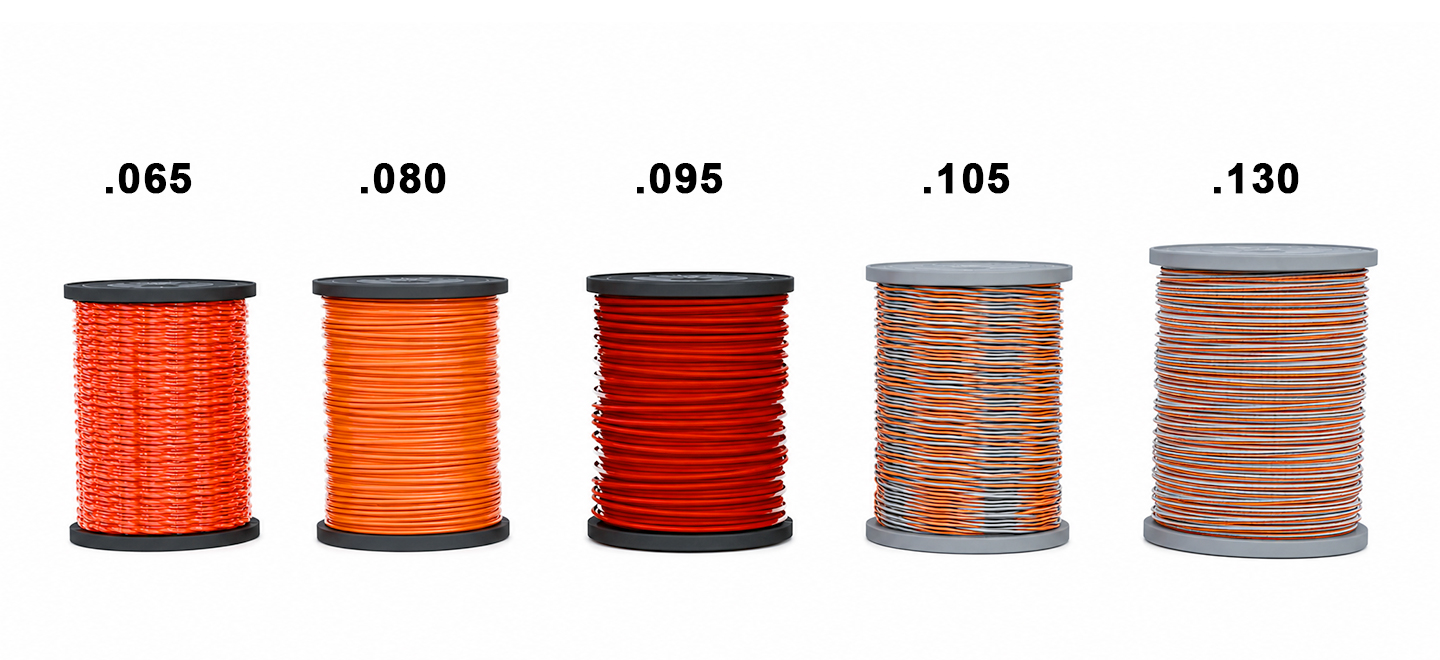
Color-Code by Diameter
Your end user is standing in a dealer's yard with a worn piece of line, trying to remember if it was .095 or .105. A consistent color system across your line turns "which one was it?" into a two-second decision.
Print the Match Guide
Which machines, which power ranges, which use cases — the diameter-to-power logic from article three, translated onto the bag. You're not selling a spool of nylon. You're selling the confidence it's the right spool.
Design for Storage
Trimmer line sits in garages and sheds through winters and summers. Resealable packaging that keeps moisture in (yes, in — nylon wants some moisture) protects the product quality you specified.
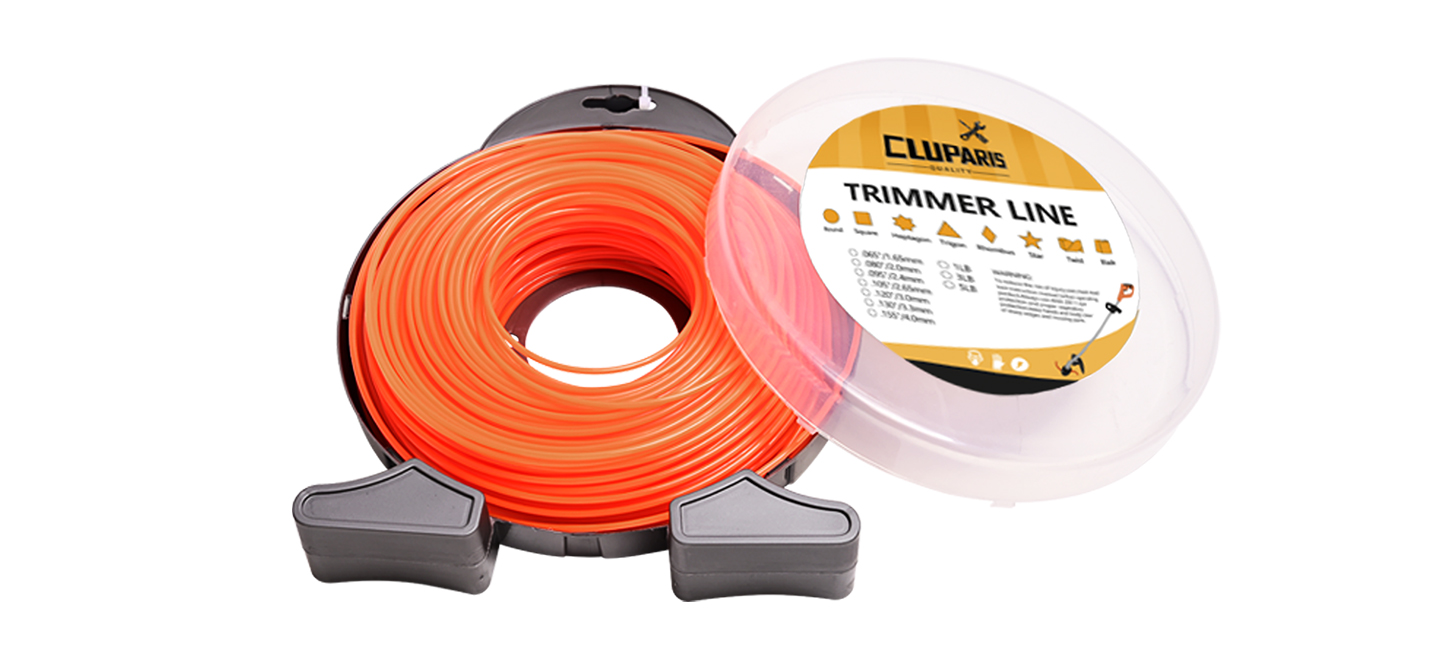
The packaging spec belongs in the same contract as the material grade. Because when a factory wants to cut cost, packaging is the first thing to drift — thinner film, cheaper ink, no reseal. Your logo will still be on it. That's the trap.
The Second-Year Problem: Spec Drift
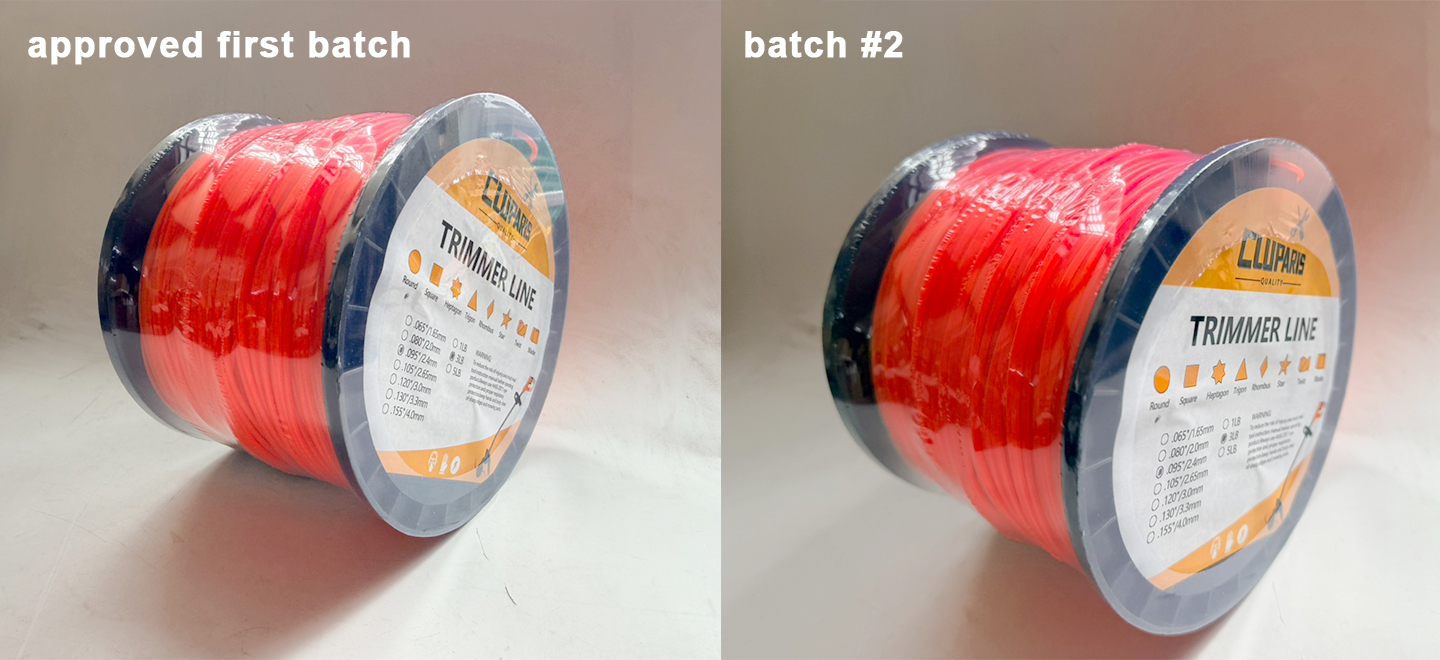
Here's why we opened with the second year. In the first production run, everyone is careful — the supplier knows you're watching, the sample went through first-article inspection, everything matches.
Then the order gets routine. Procurement changes on one side, sales changes on the other. The factory runs the line on a different extruder. Material prices move, and an "equivalent" substitute appears. Nobody renegotiates — the substitute just shows up in the shipment.
Your end users notice before your QC does. The line breaks a little more. The spools don't stack as cleanly. Nothing is dramatic enough to trigger an investigation, and dramatic enough to erode repeat purchases.
The Defense Is Boring, and It Works
None of this is expensive. All of it is cheaper than rebuilding a brand's reputation for quality.
What This Series Has Been Building Toward
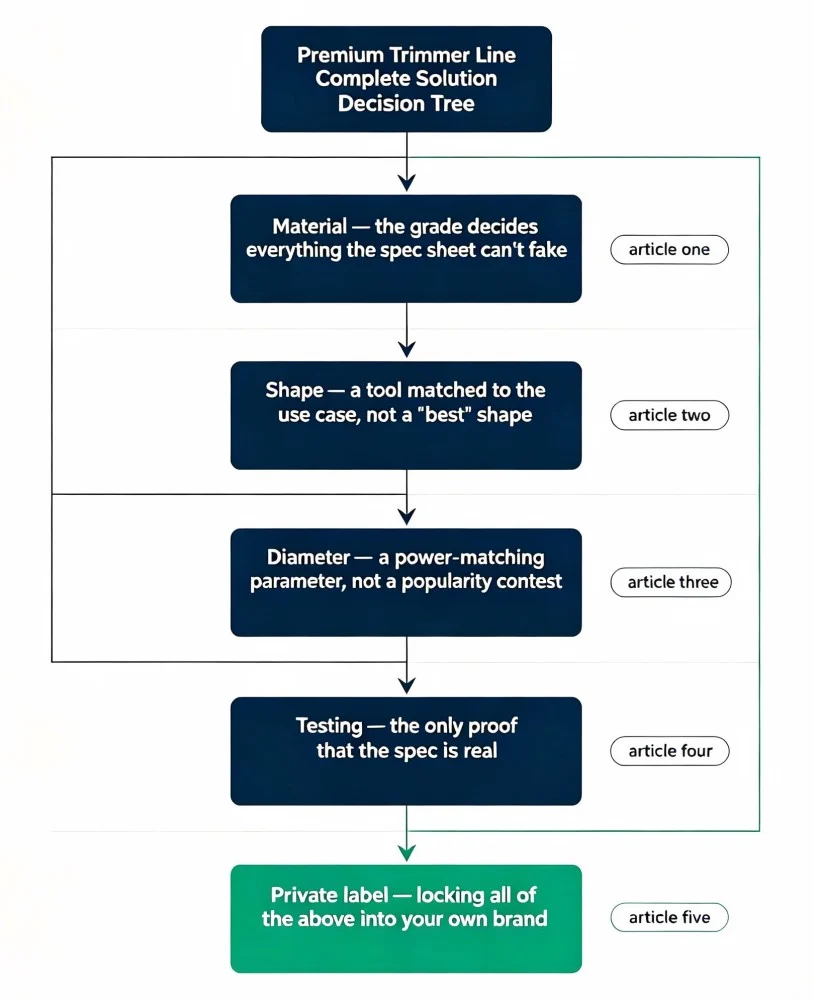
Five articles. One decision tree:
| Article | Topic | Core Question It Answers |
|---|---|---|
| 1 | Material Grade | Which polymer, from which source, at what purity? |
| 2 | Shape | Which profile matches the use case and the market? |
| 3 | Diameter & Power | What line does the engine actually drive? |
| 4 | Quality Testing | How do you verify the spec is real, not a hope? |
| 5 | Private Label | How do you lock all of the above into your own brand? |
The Bottom Line
If you're a distributor selling someone else's line, this is the path to owning your margin and your reputation. If you're already private-labeling, this is the audit list for your current spec. The suppliers who welcome this level of specification are the ones worth building a brand with. The ones who find it tedious — you've just learned something valuable about them before printing your logo on their product.
Building a Private-Label Program?
Contact our team for the spec template we use to lock material, tolerance, QC protocol, and packaging before the first spool is printed — and our OEM portfolio for your target market.
Request OEM Spec Template© 2026 Antanker OPE Parts. All rights reserved. | This article is part of the Trimmer Line Field Guide series for B2B distributors and sourcing professionals.